Ben Roth · 15 October 2026
Tracking Equity Flow Disruptions Across Partner Site Networks Following Phased Content Consolidations in the B2B SaaS Sector
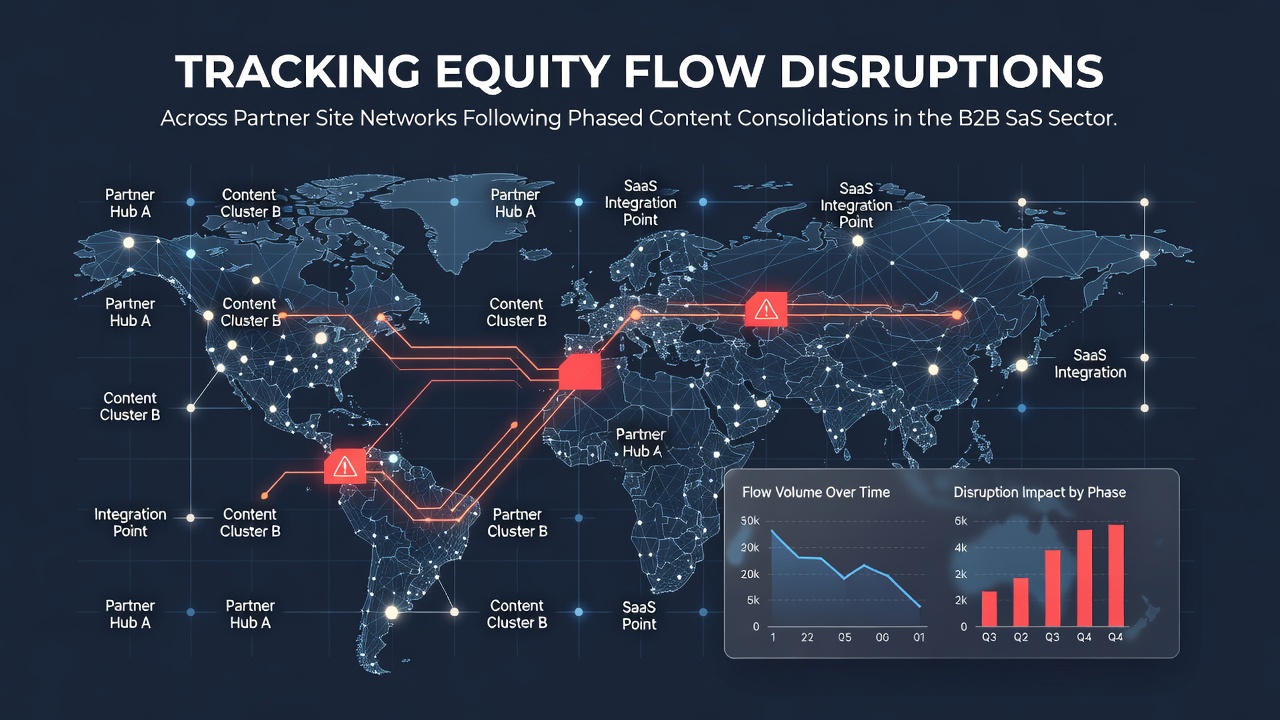
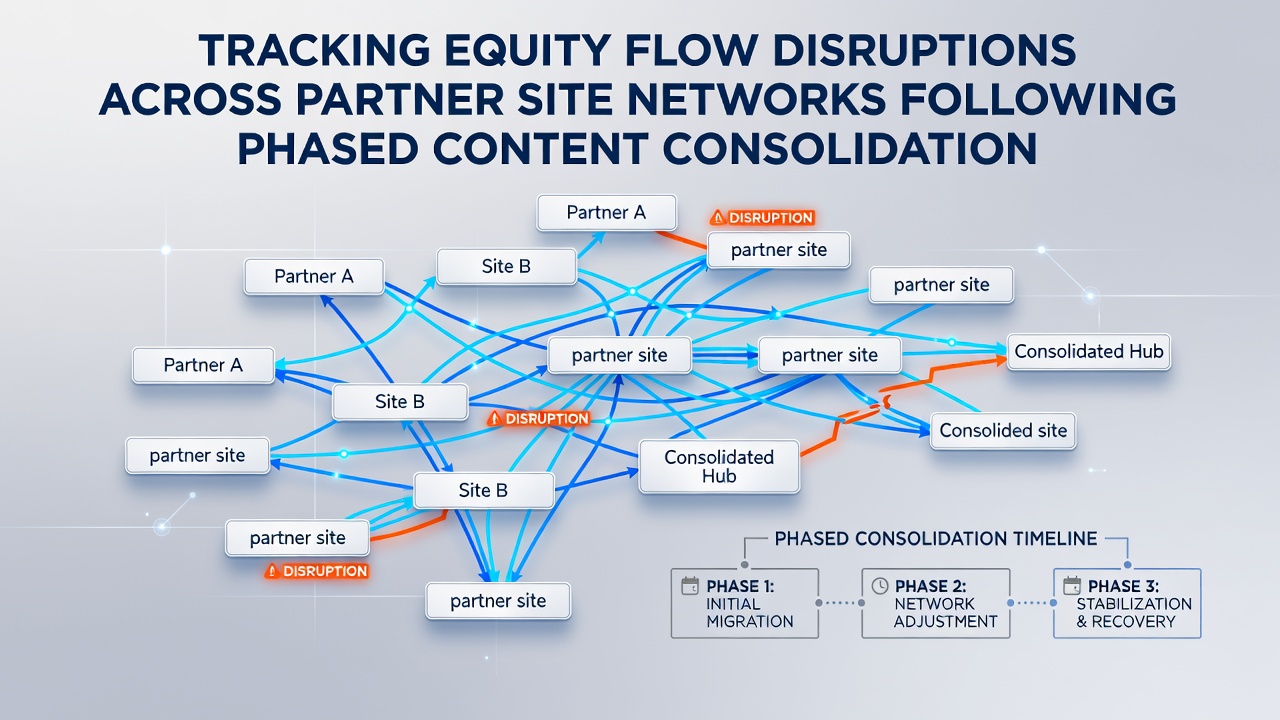
Phased content consolidations in the B2B SaaS sector involve merging multiple product pages, knowledge bases, and partner resources into centralized hubs over sequential rollout stages, and these shifts alter how link equity distributes across interconnected partner site networks. Data from industry monitoring platforms indicates that such changes often redirect referral pathways while redirecting authority signals that previously flowed through distributed content clusters.
Patterns in Partner Network Structures
B2B SaaS companies typically maintain networks of affiliate documentation sites, reseller portals, and co-branded resource centers, each carrying inbound links from industry directories and enterprise clients. When consolidation phases begin, content from subsidiary domains gets folded into primary platforms, which severs some of those established pathways and forces equity to reroute through remaining nodes. Research from academic sources such as those published by the Swinburne University of Technology shows that domain migrations in enterprise environments produce measurable drops in referral authority until new internal linking structures stabilize.
Observers tracking these movements report that equity does not vanish outright but instead concentrates around surviving partner endpoints that retain active backlink profiles. Short-term fluctuations appear in crawl logs where previously indexed URLs return 301 responses, yet the cumulative authority from those redirects lands unevenly depending on anchor text distribution and topical relevance at the destination.
Disruption Mechanisms During Rollouts
Equity flow disruptions emerge most clearly when consolidation phases overlap with partner site updates that have not synchronized their own link architectures. One documented sequence involves a core SaaS provider retiring legacy feature pages hosted on partner subdomains, which then triggers a cascade where inbound links from third-party review aggregators point to error pages or thin redirects for several weeks. Figures from European digital economy reports compiled by the European Commission highlight similar migration effects across software service sectors, where referral traffic volumes shift by double-digit percentages before recovering.
Those monitoring crawl budgets note that search engine agents prioritize the consolidated domain during active phases, temporarily de-emphasizing partner network nodes that once shared equity load. This reallocation creates visible spikes in orphan page counts across the partner ecosystem until new canonical signals propagate through the network.
Measurement Approaches and Data Sources
Analysts employ log file analysis combined with backlink index comparisons to isolate equity transfer points. They compare historical referring domain counts against current distributions at intervals of 30 and 90 days after each consolidation wave completes. Studies indicate that partner sites retaining original anchor diversity preserve more authority than those relying solely on brand mentions.
October 2026 datasets from multiple SaaS migration tracking initiatives reveal recurring clusters where equity pools form around newly centralized help centers while peripheral partner microsites experience sustained referral declines. These patterns repeat across companies that stagger their content moves rather than executing full cutovers simultaneously.
Network-Level Responses
Partner organizations respond by strengthening internal linking between remaining active pages and updating schema markup to reinforce topical connections to the primary SaaS platform. Data shows that networks implementing these adjustments within the first consolidation phase recover referral equity faster than those waiting for subsequent stages. External directories and industry association listings also require manual updates to prevent permanent loss of equity pathways that once pointed to now-consolidated assets.
Additional monitoring reveals that certain partner sites experience temporary gains when they become the default redirect targets for retired content, concentrating equity that previously spread across multiple endpoints. This concentration effect reverses once the main platform fully absorbs the redirected signals and new internal structures take hold.
Conclusion
Equity flow tracking after phased consolidations requires ongoing comparison of backlink graphs and referral logs across the entire partner network rather than isolated domain analysis. Patterns observed through 2026 demonstrate that synchronized updates between primary platforms and partner endpoints reduce the duration and severity of disruptions while preserving cumulative authority signals. Organizations maintaining detailed migration timelines and anchor inventories position themselves to restore balanced equity distribution more rapidly once all phases conclude.